

Special Education
- Home
- Special Education
Inclusive Learning for Every Child
At MSG Hi-Tech Gurukul Girls School, we believe that every child is unique, with individual strengths, learning styles, and potential. Our Special Education approach ensures that students requiring additional academic, emotional, or learning support receive personalized guidance in a caring, inclusive, and encouraging environment. We are committed to helping every learner grow with confidence and dignity.
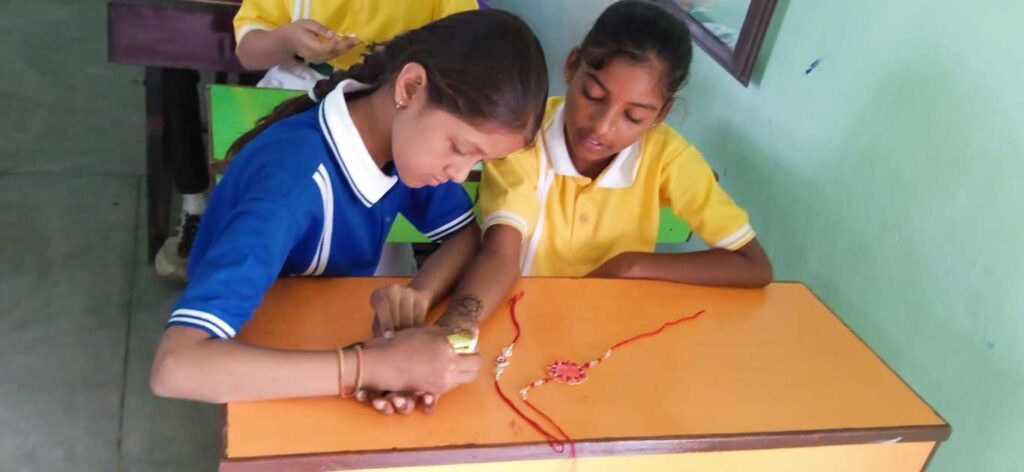
Personalized Learning for Individual Needs
Individual Attention
Teachers observe each student's learning needs and provide personalized academic guidance.
Positive Learning Environment
Students are encouraged through motivation, appreciation, and confidence-building rather than pressure.
Regular Progress Monitoring
Continuous observation and constructive feedback help track each student's growth and development.
Learning Without Barriers
Our educators create flexible learning experiences that accommodate different abilities and learning preferences.
- Self-confidence
- Respect and empathy
- Emotional well-being
- Independent thinking
- Communication skills
- Teamwork and cooperation
- Responsible behaviour
- Positive values
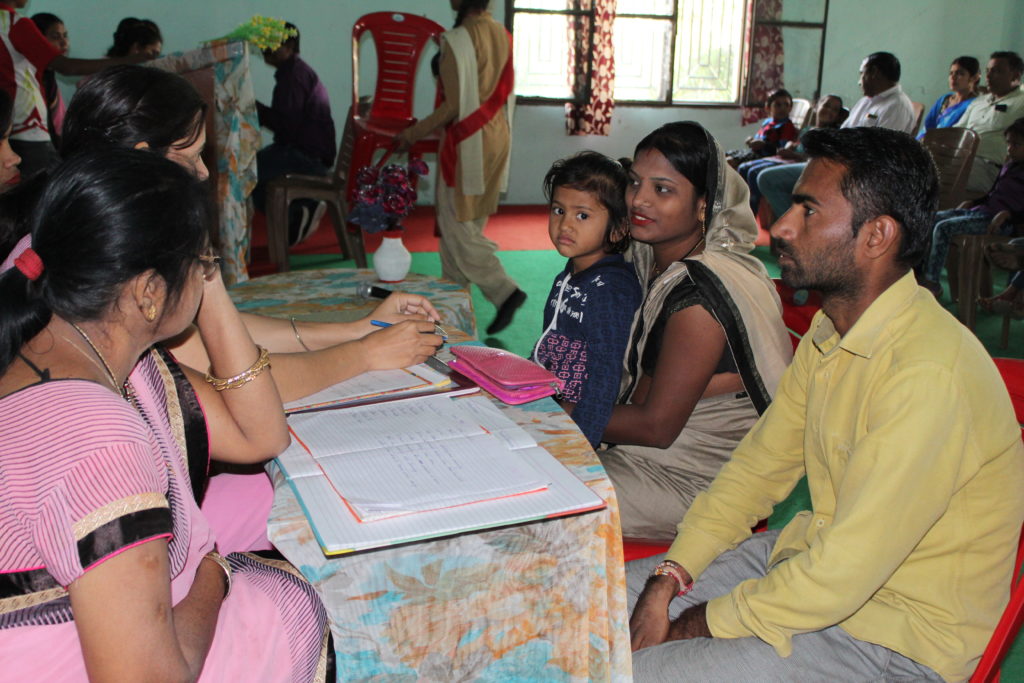
A Strong Partnership Between School and Parents
The success of every child is strengthened through meaningful collaboration between teachers and parents.
Regular communication, constructive feedback, and shared responsibility help us create personalized strategies that support each student’s academic progress, emotional well-being, and overall development.
Together, we ensure that every learner receives the guidance, encouragement, and opportunities needed to reach their fullest potential.
Empowering Every Learner
At MSG Hi-Tech Gurukul Girls School, we celebrate the uniqueness of every child. Through inclusive practices, individualized attention, and compassionate guidance, we create opportunities for every learner to grow academically, socially, and emotionally. Our commitment is to ensure that no child is left behind and that every student is empowered to succeed with confidence.
Prep-classes
To reinforce basic concepts and skills taught in the lower grades, and to help promote independent work habits in the delayed learners we have started Saturday prep-classes. These classes are to give special attention to the students who are weak in basic English reading writing and comprehension ability and basic numeric skills. Communicative classes in French are given to practice communication skills and increase fluency. Students are also able to choose books from our very well-resourced library, including titles from the Accelerated Reader and “Rally of Lecture” reading programmes. Parents can help greatly by showing interest in the book, and reading with and to your child.
Inventive teaching methodology.
Our highly professional and trained educators use the latest scientific teaching methodology to meet the standard and quality of its international curriculum. Here is a brief description of some of the latest classroom technologies that we use in Shah Satnam Ji Girls’ School to make the learners interested and engaged:
- Classroom GD
Students are divided into groups and are participate in a group discussion on a learnt topic under the educator’s guidance.
- Assembly presentation
Students take any subject topic from their syllabus, do the research work and give a presentation in the assembly for all.
- Brain Teaser
A quick activity to stimulate thinking. Example: How many sides does a cave have? (Answer: Two – inside and outside!)
- Cartoons or puppets
Introduce a thought, concept, skill etc. by posting, reading or creating cartoons or puppets. Cartoons or puppets can also be cut up and used as a sequencing activity.
- Current Events
As learners enter, have them respond to posted events in recent news in various ways – discussing three ways it could affect them, drawing a picture, etc. Use responses for discussion.
- Daily
An opener activity in which educators post statements or any number of daily questions, problems, etc. for learners to correct, finish, explain, etc.
- Fishbowl
Cut up questions and put in a fishbowl. Have learners draw out one question from a past lesson and be prepared to answer.
- Journal Reflection Writing
Typically done for a few minutes each day. The writing or drawing is done in a notebook and is often used for exploration of ideas of interest to the learners or to encourage reflection. Journal writing can be statements written by the educator as dictated by the learner. In other instances, the journal can be a writing activity about a class mascot. On the weekend, the mascot is taken home and a journal entry is recorded about what happened during the “sleep over”. Photos of the event are an added delight.
- Forced Analogy
Have learners make analogies by comparing two selected words. Example: Compare a zebra to a penguin.
- Knowledge Rating
A pre-reading strategy designed to evaluate learners’ prior knowledge of a topic by having them rate how well they know the content vocabulary words. The vocabulary words are presented and learners rate each word with a number – (1) know it well enough to define it, (2) think I know it, (3) have heard it or have seen it, and (4) no clue. The educator can then identify how much pre-reading instruction will be necessary for critical reading as well as identifying words for explicit vocabulary instruction. It also allows the educator to differentiate instruction based on a learner’s need.
- Spotlight On
Similar to “Learner of the Week.” The work and background of a single learner is showcased to the class and learners are asked to say three positive things about that person’s work.
- Venn Diagrams
Display a partial Venn diagram and have learners fill in the rest. It is a form of graphic organizer commonly used in mathematics and comparisons.
- Suggestion/Mailbox
Useful for collecting any form of feedback. Learner opinions can be regularly collected as part of class activities or the box could be used in the classroom as an informal method for learners to share information
- Word Associates
Require learners upon entering class to identify which word or object is different from a series of others. Learners then make a general statement to link the other words or objects. It requires higher-level thinking skills and help learners identify relationships between words while recognizing categorizing factors.